release edition [047] read time [8 minutes] Welcome to The Multifamily Download, a weekly newsletter where I provide institutional insights to help you build an exceptional Multifamily career. Forwarded this email? Subscribe here. Today at a Glance:
AcquisitionThis past week my company officially re-entered growth mode with the acquisition of a three-property, 365-unit portfolio, and I couldn't be more thrilled. Before we dive into the 10 key lessons and learnings from this portfolio acquisition, I'll share some context about the DNA of my company. Tailwind Investment Group is a multifamily owner/operator that owns properties across the California, Mountain West, and Southwest regions. We typically raise Equity via institutional JVs with typical 90/10 or 95/5 Equity structures. Since 2021, we've raised nearly $200M from investors and have scaled to nearly 2,000 units. We think that an exceptional buying window is about to present itself, and I'm excited to share more about that journey with you in The Multifamily Download as it unfolds. Now, here are the 10 lessons from my $60M acquisition:
I dive into each of these lessons below, and I hope they're insightful as you're preparing for 2026. Hit reply and let me know which one(s) resonate with you! 1. Focus on One-Time Irreversible DecisionsSuccess and longevity in the Multifamily business is all about making excellent one-time irreversible decisions. Some examples of this include: The purchase price, the type of debt, the leverage, the total basis, and the location. This portfolio acquisition was a great example of this lesson: We acquired 365-units at less than 50% of today's replacement cost in low (or no) supply markets with assumable HUD debt at a blended interest rate of less than 3% with 30-years of term remaining. I couldn't have asked for better deal profiles in today's market environment. 2. Take the Lead & Be ProactiveThis portfolio acquisition consisted of three separate transactions across three separate markets in two different states. To put it mildly, there were a ton of moving parts. There was a lot of work to be done, and a lot of opportunities for delays or mistakes. I took a proactive approach, and decided to take the lead on various items that required additional effort to complete or approve. For example, I built a simple but powerful Excel template that translates the data from our property manager's unit walks into a cost estimator to help us determine exactly which interior items and costs would be needed for each unit interior during our hold period. This template helped build trust with our Equity partner and create clarity for our construction team. Win-win. 3. Pay More For BetterLegal counsel, third parties, contractors, title & escrow, and brokers all have something in common: The best ones are expensive, and they're well worth it. These advisors are typically paid for their expertise and performance, and this transaction reminded me that we often get what we pay for in the Real Estate business. Building a "team" of trusted advisors is a cheat code, as it can be the difference between pushing a deal across the finish line or having it blow up at an inopportune moment. Fortunately, we had several trusted advisors in our corner, and these transactions went relatively smooth despite a number of headwinds including:
4. Now is the TimeThe wave of incredible buying opportunities will soon emerge. 2020-2022 bridge loans are coming due, and many of these borrowers will be forced to sell at market pricing. Please, I implore you, spend the next 30 days preparing your attack plan for next year. (I'd be happy to help; more on this in the next section). Do not miss the buying window that will emerge in the next 12-24 months. I believe it's going to be the best window to acquire Multifamily in more than a decade. 5. Normalize Feast or FamineThe Multifamily business is tough, and that's the way it should be. When things feel easy, frothy, or "too good to be true", then that should be a strong indicator to take a step back to reevaluate the playing field. You can ask almost any Multifamily owner/operator that acquired properties through the 2021-2022 peak and they'll tell you the same thing: "I wish I had been less aggressive, used lower leverage, and/or acquired assets in tighter supply markets". To paraphrase the late Charlie Munger, the best operators or managers are the ones that know how to do nothing (i.e. be patient) for long periods of time. 6. Make the Juice Worth the SqueezeDeciding to acquire or pass on a Multifamily acquisition can be a challenging decision, especially for Sponsors that have direct access to plentiful private capital, as it becomes easy to develop a bias towards acquiring properties versus not. My lesson during these transactions was that the effort and reward must be worth the brain damage and potential risk. Simply asking the question "Is this going to be worth it?" before embarking on any type of business-related execution can save a ton of heartburn or headache. The answer will be different for everyone, of course, because everyone's opportunity costs are different. The point is to remember that our greatest cost in life is opportunity cost. We can do anything we want, but we can't do everything. 7. Difficulty Unlocks AlphaChallenging endeavors are competition limiters. This portfolio is a great example of that reality because there are three properties in three distinct markets:
The Seller needed to sell these properties as a portfolio to a single buyer, but the Equity check size was unrealistic for an individual investor, and the Grass Valley location was too tertiary for most institutional investors. This difficulty unlocked alpha for our team, as we negotiated incredible purchase prices on these stable assets that need minimal Capital improvements. As Charlie Munger said, "A great business (property) at a fair price is superior to a fair business (property) at a great price.” 8. Learn How To Learn QuicklyChoosing to assume three loans from HUD was easy to decide, but tough to execute. Our team had not previously assumed a HUD loan, so we had to quickly learn the intricacies and nuances of how the process worked. We quickly learned that we would need to submit our full organizational chart to HUD at our TPA submittal just 45 days after our PSA effective date. Yikes. And, oh by the way, we were simultaneously raising $30M from a TBD Equity partner. The catch? We couldn't submit our TPA to HUD on day 45 until after we knew who our Equity partner was and only once we had our Joint Venture Agreement ("JVA") in place because of the organizational chart completion requirement. My point is this: Quickly getting up to speed on a new subject matter (like the HUD TPA process) can make or break your ability to confidently pursue a new opportunity. We were able to get educated and comfortable with the HUD TPA process quickly, communicate it to our now-Equity partner, and raise the equity in a relatively short amount of time. 9. Discipline Dictates DestinyBeing disciplined means maintaining the controllable inputs that lead to the desired outputs regardless of if there is any evidence that it's working. This is why business is difficult, because the fruit isn't ready until long after the seeds were planted. In Multifamily, the past few years have been challenging, and it's been no different for our team. We've looked at many thousands of deals, underwritten a few thousand, submitted LOIs on 1,000+, and have gotten fewer than 10 under LOI or PSA. This ratio should improve over the next few years, but only if we maintain our disciplined approach. 10. Begin With The End In MindThis is one of the seven habits of highly effective people according to Stephen Covey, and I believe him. In Multifamily, this means thinking about the next buyer before acquisition, sizing to a refinance take-out at maturity in case the market isn't strong enough to sell, and sensitizing downside scenarios to understand how much (or little) cushion exists. Beginning with the end in mind and working backwards is a great way to remain focused on what matters most to you, your investors, or your clients. What outcome are we striving for, and why? What are the probabilities of all possible outcomes, and how do we adjust if things get off track? This is why first principles thinking is so powerful. P.S. In case you missed it, check out the excellent article about this portfolio acquisition written by Les Shaver on Multifamily Dive here. Thanks to Les and his team for featuring the article on the Multifamily Dive home page! MomentumAs I alluded to above, now is the time to start building momentum for next year. Spending time reflecting on how you want 2026 to look and then begin building a plan to achieve it is a powerful exercise. I have begun this process myself, and spent time with my good friend David Alex this week in which we bounced ideas for each of our brands and businesses. Side note: David is incredible at what he does. Reach out to him if his services could be a fit for your business. I do not receive compensation for saying this. He's simply an exceptionally talented guy. 1-on-1 conversations like my recent one with David are powerful, and I'd like to help you in a 1-on-1 format. So, I've decided to open up my calendar for Friday office hours on a first come, first served basis. Feel free to schedule a call on my Calendly below and let's strategize for 2026! 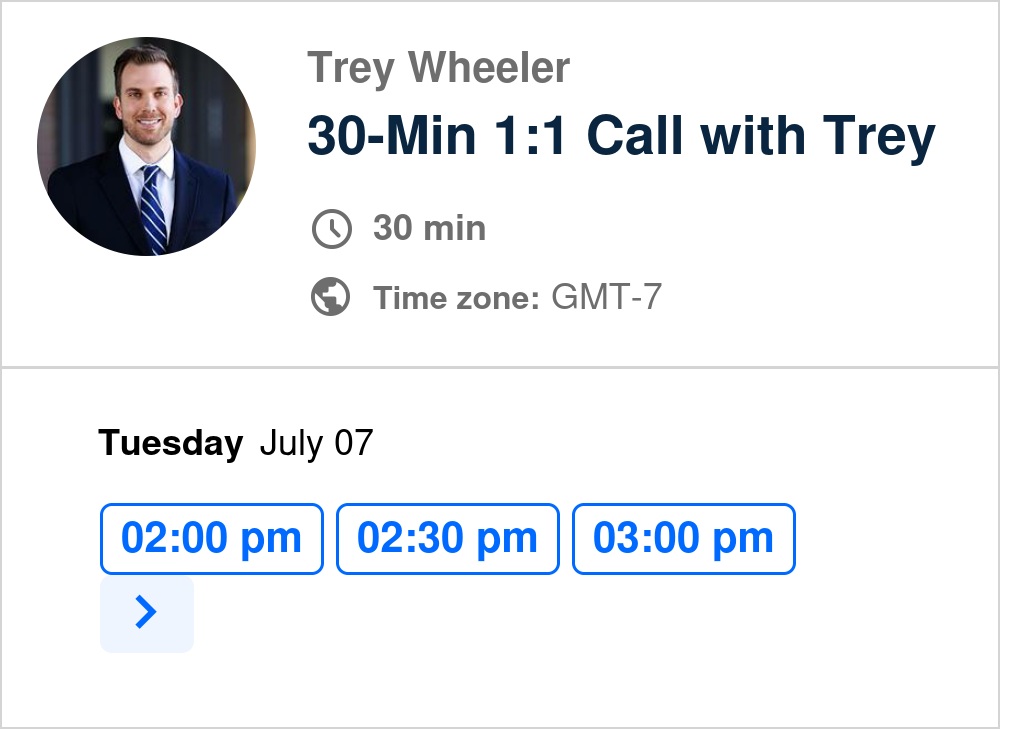
Weekly ListenThis week's listen is your choice! Click the link below and scroll down to find the five podcast episodes that I appeared on as a guest in 2024. I hope you find them insightful! You can listen to the episode(s) here.
Wrap UpThat's it for this week. I hope you found this edition of The Multifamily Download insightful and enjoyable. If so, would you consider sharing it with a friend or colleague? Simply send them this link. I always welcome your feedback. Reply and let me know what you'd like to see in the future. Thanks for reading. See you next week! Forwarded this email? Sign up here. Join me on LinkedIn | Twitter | Website |
The Multifamily Download · December 6, 2025
10 Lessons From My $60M Acquisition
Get the next issue
Free every Saturday, read by thousands of multifamily professionals.
Subscribe Free →